
Reading time: 4 minutes
Ear pain is not always caused by an ear infection. In some cases, the source of the discomfort is actually a problem with your wisdom teeth. Because the jaw, teeth, and ears share nerves and muscles, pain from impacted or infected wisdom teeth can sometimes be felt in the ear.
Table of Contents
- Can Wisdom Teeth Cause Ear Pain?
- Why Wisdom Teeth Can Cause Ear Pain
- Other Symptoms That May Occur
- Diagnosing Wisdom Tooth-Related Ear Pain
- Treatment for Wisdom Tooth-Related Ear Pain
- Personalized Wisdom Tooth Care
- Wisdom Tooth Removal in Boulder, CO
- FAQs
Can Wisdom Teeth Cause Ear Pain?
Yes. Wisdom teeth can cause ear pain, particularly when they are impacted, partially erupted, or when they develop an infection.
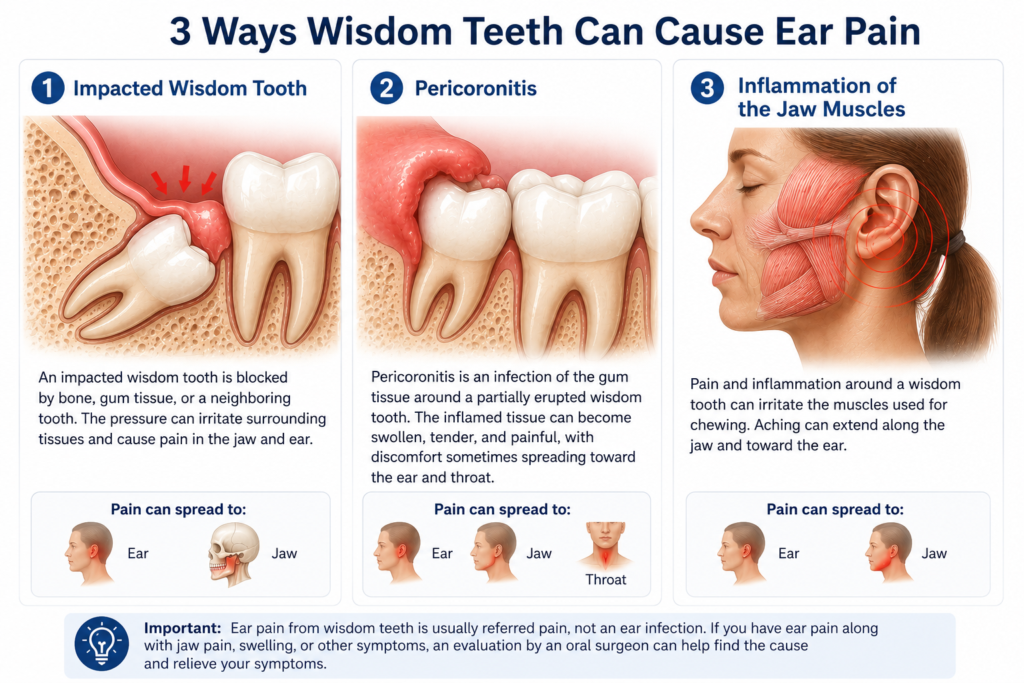
The pain is usually not coming from the ear itself. Instead, it is a phenomenon called referred pain, where the discomfort originates in the jaw or surrounding tissues but is felt in the ear because the same nerves transmit pain signals from both areas.
If your ear pain is accompanied by jaw discomfort, swelling, or pain behind your back molars, your wisdom teeth may be contributing to your symptoms.
Why Wisdom Teeth Can Cause Ear Pain
Several wisdom tooth problems can lead to pain that radiates toward the ear.
Impacted Wisdom Teeth
An impacted wisdom tooth is unable to erupt normally because it is blocked by bone, gum tissue, or a neighboring tooth. The pressure created by an impacted tooth can irritate surrounding tissues and contribute to discomfort that extends into the jaw and ear.
Pericoronitis
Pericoronitis is an infection of the gum tissue surrounding a partially erupted wisdom tooth. The inflamed tissue can become swollen, tender, and painful, with discomfort sometimes spreading toward the ear and throat.
Inflammation of the Jaw Muscles
Pain and inflammation around a wisdom tooth can affect the muscles used for chewing. As these muscles become irritated, it is common to experience aching that extends along the jaw and toward the ear.
Other Symptoms That May Occur
Ear pain caused by wisdom teeth is often accompanied by other signs that point to the source of the problem.
Common symptoms include:
- Pain behind the back molars
- Swollen or tender gums
- Jaw pain or stiffness
- Difficulty opening the mouth fully
- Pain when chewing
- Bad breath or an unpleasant taste in the mouth
- Swelling along the jaw
- Headaches
If you experience severe swelling, difficulty swallowing, difficulty breathing, or a fever, seek prompt medical or dental evaluation.
Diagnosing Wisdom Tooth-Related Ear Pain
Ear pain can have many causes, including ear infections, temporomandibular joint (TMJ) disorders, sinus problems, and dental conditions. An examination is the best way to determine whether your wisdom teeth are responsible.
A clinical examination, along with diagnostic imaging when needed, can determine the position of the wisdom teeth and identify signs of impaction, infection, or other problems contributing to the discomfort
Treatment for Wisdom Tooth-Related Ear Pain
The most appropriate treatment depends on the cause of your symptoms. If inflammation or infection is present, treatment may focus on controlling the infection and reducing inflammation. When impacted or problematic wisdom teeth are responsible for recurring pain, wisdom tooth removal is often recommended to eliminate the source of the problem and help prevent future complications.
Until you can be evaluated, measures that may help relieve discomfort include:
- Take over-the-counter pain medication as directed
- Rinse gently with warm salt water if the gum tissue is irritated
- Avoid chewing on the affected side
- Keep the area around partially erupted wisdom teeth as clean as possible
Personalized Wisdom Tooth Care
Not every patient with ear pain needs their wisdom teeth removed, but determining the cause of the discomfort is an important first step. If you are unsure whether your wisdom teeth may be contributing to your symptoms, learn how to know if your wisdom teeth are coming in before scheduling an evaluation.
At Foley & Le Oral and Maxillofacial Surgery, Dr. Benjamin Foley, Dr. Thao Le, and Dr. Michael Schiappa carefully evaluate wisdom teeth and explain all appropriate treatment options before recommending surgery. Our goal is to help patients understand the source of their symptoms, what treatment involves, and how to support a smooth recovery if wisdom tooth removal is recommended.
Wisdom Tooth Removal in Boulder, CO
If you are experiencing persistent ear pain and think your wisdom teeth may be the cause, schedule an evaluation with Foley & Le Oral and Maxillofacial Surgery.
To book an appointment at our oral surgery office in Boulder, CO, call (303) 444-2255 or visit us at 1420 28th St, UNIT 100, Boulder, CO.
FAQs
Yes. Impacted or infected wisdom teeth can contribute to referred pain that affects the jaw, temples, and ears, leading to headaches in some patients.
If your wisdom teeth are the source of the pain, removing them often resolves the symptoms once the area has healed. However, ear pain can have many causes, so an examination is needed to determine whether your wisdom teeth are responsible.
Early signs that your wisdom teeth are erupting may include soreness behind the back molars, swollen or tender gums, jaw discomfort, difficulty opening your mouth fully, or occasional pain when chewing. Some people also experience pressure in the back of the jaw before the tooth becomes visible.
Wisdom tooth pain often begins as a dull ache or feeling of pressure behind the back molars. As the tooth erupts or becomes impacted, the pain may become sharper and spread to the jaw, ear, temple, or throat. Swelling, tenderness, and difficulty chewing may also occur.


