
Reading time: 3 minutes
When the roots of a lower wisdom tooth are very close to a nerve in the jaw, removing the entire tooth can increase the risk of nerve injury and changes in sensation. In some cases, an oral surgeon may recommend a coronectomy instead. This procedure removes the crown of the wisdom tooth while intentionally leaving the roots in place to reduce the risk of disturbing the nearby nerve.
What Is a Coronectomy?
A coronectomy is a type of wisdom tooth surgery in which the crown of a lower wisdom tooth is removed but the roots are intentionally left in the jaw. The procedure is mainly considered when the tooth roots are very close to the inferior alveolar nerve, which travels through the lower jaw and provides feeling to the lower teeth, lip and chin.
Removing the entire tooth in this situation can increase the risk of nerve injury. By leaving the roots undisturbed, a coronectomy can lower that risk.
Why Would a Wisdom Tooth Need a Coronectomy?
A coronectomy may be considered when a lower wisdom tooth needs treatment but its roots are very close to the inferior alveolar nerve. Removing the entire tooth in this situation could increase the risk of nerve injury, so leaving healthy, stable roots in place may be a safer option.
Reasons the tooth may still need treatment include:
- Repeated infection around the tooth
- Decay affecting the wisdom tooth or the tooth beside it
- Pain or swelling
- Food trapping around a partially erupted tooth
- Damage to a neighboring tooth
- A cyst or tumor growing on the tooth
How Do We Know If the Roots Are Close to a Nerve?
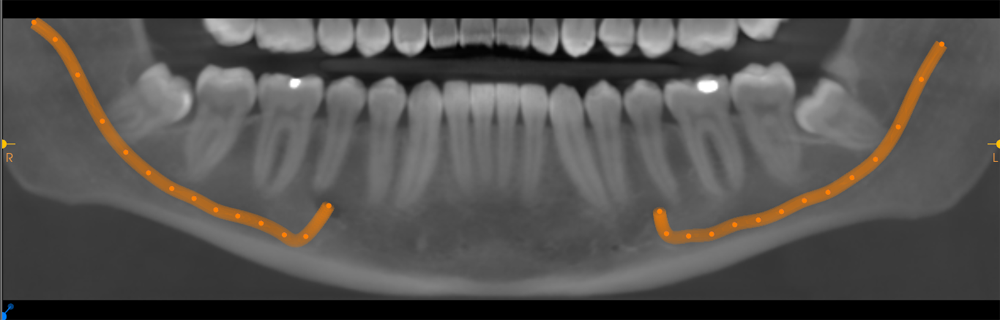
Imaging plays an important role in treatment planning. A panoramic X-ray can show the wisdom tooth, its roots, and the nerve canal running through the lower jaw. Certain findings may suggest that the roots and nerve are very close together.
When more detail is needed, we may use cone beam computed tomography, or CBCT. This type of 3D dental imaging allows us to see the relationship between the tooth roots and nerve from several angles.
Imaging helps us decide whether complete wisdom tooth removal is appropriate or whether leaving the roots in place could reduce risk.
How a Coronectomy is Performed
A coronectomy begins much like a standard wisdom tooth removal. After the area is numb, an opening is created in the gums, and a small amount of bone may be removed to reach the tooth. The crown is then carefully separated from the roots and removed. The roots are left in place, and the remaining tooth structure is reduced below the surrounding bone so the gums can be closed over the area. Bone grafting is also frequently done to improve healing and decrease post operative complications
Over time, the bone and gums heal around the retained roots. The roots may remain in place or gradually move away from the nerve, but most do not cause problems or require further treatment.
Recovery After a Coronectomy
Recovery is generally similar to wisdom tooth removal. Swelling, soreness, mild bleeding, and jaw stiffness are common for the first few days. Soft foods, limited activity, and careful cleaning can help protect the area as it heals.
Follow-up may be recommended to monitor the retained roots. Contact our office if pain or swelling worsens, or if you develop a fever, drainage, or a persistent bad taste.
Choosing the Right Approach for Your Wisdom Tooth
At Foley & Le Oral Surgery, we evaluate the tooth, surrounding bone, and nearby nerve before recommending treatment. If a coronectomy offers a safer way to address a high-risk wisdom tooth, we can explain why it is being considered and what you can expect afterward.
To book an appointment at our oral surgery office in Boulder, CO, call (303) 444-2255 or visit us at 1420 28th St, UNIT 100, Boulder, CO.
FAQs
Is a coronectomy safer than removing the whole wisdom tooth?
For selected lower wisdom teeth whose roots are very close to the inferior alveolar nerve, a coronectomy can reduce the risk of nerve injury compared with complete removal. It is not necessary or appropriate for every wisdom tooth as the roots left behind can become infected and require removal.
Why not just leave the entire wisdom tooth alone?
If a wisdom tooth is healthy and not causing problems, monitoring may sometimes be an option. A coronectomy is considered when the tooth needs treatment but removing the roots could create an increased risk of nerve injury.
Can wisdom tooth roots cause problems after a coronectomy?
Most retained roots do not cause problems or require additional treatment. If a root later becomes exposed or becomes infected, we may recommend removing it.
Can you still get dry socket after a coronectomy?
Yes, although it is less common than after complete wisdom tooth removal. A blood clot still needs to form over the surgical site after the crown is removed. If that clot breaks down or becomes dislodged, the underlying bone may become exposed and cause significant pain.


